
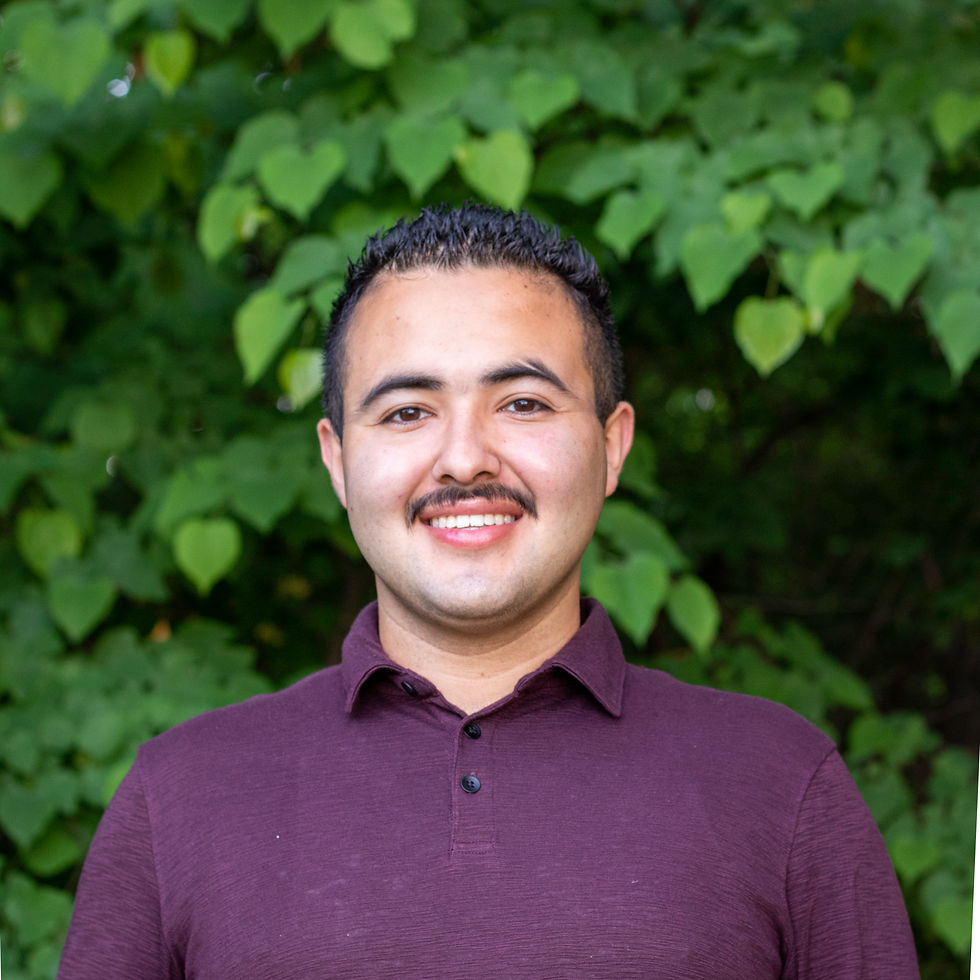
June Scholar of the Month Shalin Desai Shares His Journey from India to UCSD
- allwaysup
- Jun 17, 2021
- 5 min read

We were lucky enough to have Shalin share his road to college and his experiences at UCSD, despite his busy schedule during UCSD's quarter system. Please read below to learn about Shalin and the knowledge he has to share:
1. Tell me a little bit about yourself and your college experience.
Hi AWU family! My name is Shalin Desai. I am a graduating senior at the University of California, San Diego (UCSD) with a major in Physiology and Neuroscience and a minor in Psychology.
I was born in India, and I moved to the U.S. in 2012. In our first year in the U.S., I lived at my uncle’s house where I finished my eighth grade while also learning to fluently speak and write English. Once I finished eighth grade, I moved with my parents to our small, one-bedroom apartment to start high school. It was never easy to finish my schoolwork in our crowded apartment, but I knew educating myself was my only way out of our struggles. So, I put my big boy pants on to make sure I did well and got into college. It was spring of 2017, and I saw “Congratulations” in an email from UCSD. It changed my life forever. Getting into UCSD not only meant I accomplished my goal, but also it was a symbol of hope for a family of immigrants.
UCSD was a completely new world, and it wasn’t easy navigating this new world. But it was my family, friends and, most importantly, mentors who helped me make UCSD my new home. Through their support, I found my niche at UCSD and my passion for educating others, mentoring incoming students and conducting research in a real-world lab. Now, 4 years later, I am proud of my rollercoaster ride through college because it is a ride I would love to go on one more time.
2. What have been the most rewarding activities/academics you participated in?
One of my most rewarding activities in college was my position as a tutor for Chemistry. As a tutor, I led workshops of 15-20 students who all usually had widely different educational backgrounds. The best part about this experience revolved around the fact that we made a community together. Although our primary goal was to learn Chemistry, it became much more than that. Together, we created a space where we made Chemistry fun (something that can be impossible to do), shared our struggles outside of our classes, and met new people from whom we learned something. This space became especially important during the pandemic because the students and I inevitably shared our struggles of remote learning, and we sought to collectively support each other during a time when we felt alone and isolated. Over time, this experience has instilled a passion in me to keep educating others around me and to always work towards creating spaces where people mutually strive for excellence.
3. How did you manage during the pandemic? Is there anything you learned that you will take with you now that it looks like we are past the worst of it?
My professor once told us that there are two kinds of people in the world. The first are “architects” (not me) who are meticulous about their work and do it in advance. The second are “firefighters” (me) who only do their work at the last minute or when there is a “fire”; in other words, they are procrastinators. Because I am a firefighter, it was difficult having a flexible schedule where I did not have to attend classes, open-book exams, etc. It caused a lot of stress and anxiety, so I implemented a to-do list to keep myself accountable. Every weekend I would write down my tasks for the week and assign them to different days. Through this, I was able to keep myself on track and fight my “firefighter” tendency. In a sense, the pandemic became a blessing in disguise because it forced me to use this technique which will save me lots of anxiety and stress in the future.
Another lesson I learned through our open-book exams was the importance of creating my own study guides. I created study guides because I wanted to have one document with all the pertinent information so that if I needed information during the exam, I would not have to flip through hundreds of lecture slides. In doing so, I quickly realized how I barely used the study guides because I would usually know the information. It became a powerful study tool that allowed me to organize information in a coherent manner (which is usually what exam questions ask you to do). And on top of this, I can go back to these study guides in the future to reference various topics. It is literally one of the best study tools I have discovered, and I hope to continue using it in the future.
4. Congratulations on your graduation! What advice do you have for the class of 2025 All Ways Up scholars?
Oh boy, there is so much I can say here, but I will narrow it down to two ideas to keep it short. First, you have probably heard this a million times already, but I am going to say it again because repetition is key: seek support and help when you need it. I am going to go even further and say that seek support even when you don’t think you need it; you may never know what you may learn from someone! I understand that it is easy for me to say and actually hard for you to do; I know that because I have been in difficult situations and was resistant to seek help. However, when I sought help, I found that most professors, faculty and advisors at my college want to help me (I mean that’s their job right?) and that they love talking to students. And if you think your college faculty don’t understand you or hear you, reach out to AWU! You not only have Lee and Taos, but also hundreds of other AWU students as a resource. Long story short: please seek out help and support!
Second, make sure to take care of yourself! After a tough midterm, go watch a movie or grab dinner with friends. Whatever gives you pleasure and does not feel like work, make sure to take time to do those things. It is similar to refueling your car; no matter how expensive gas may be, you have to refuel your car for it to work. Similarly, no matter how impossible taking a break may seem, you might just have to do it for your own well-being.
5. What’s next for you?
I just graduated last week and I am applying to medical school. If I get in, I will start medical school in the fall of 2022. Until then, I will be volunteering at two hospitals and working as an ABA to gain clinical experience.


Comments